
Calpeda GQ pumps for drainage and wastewater.
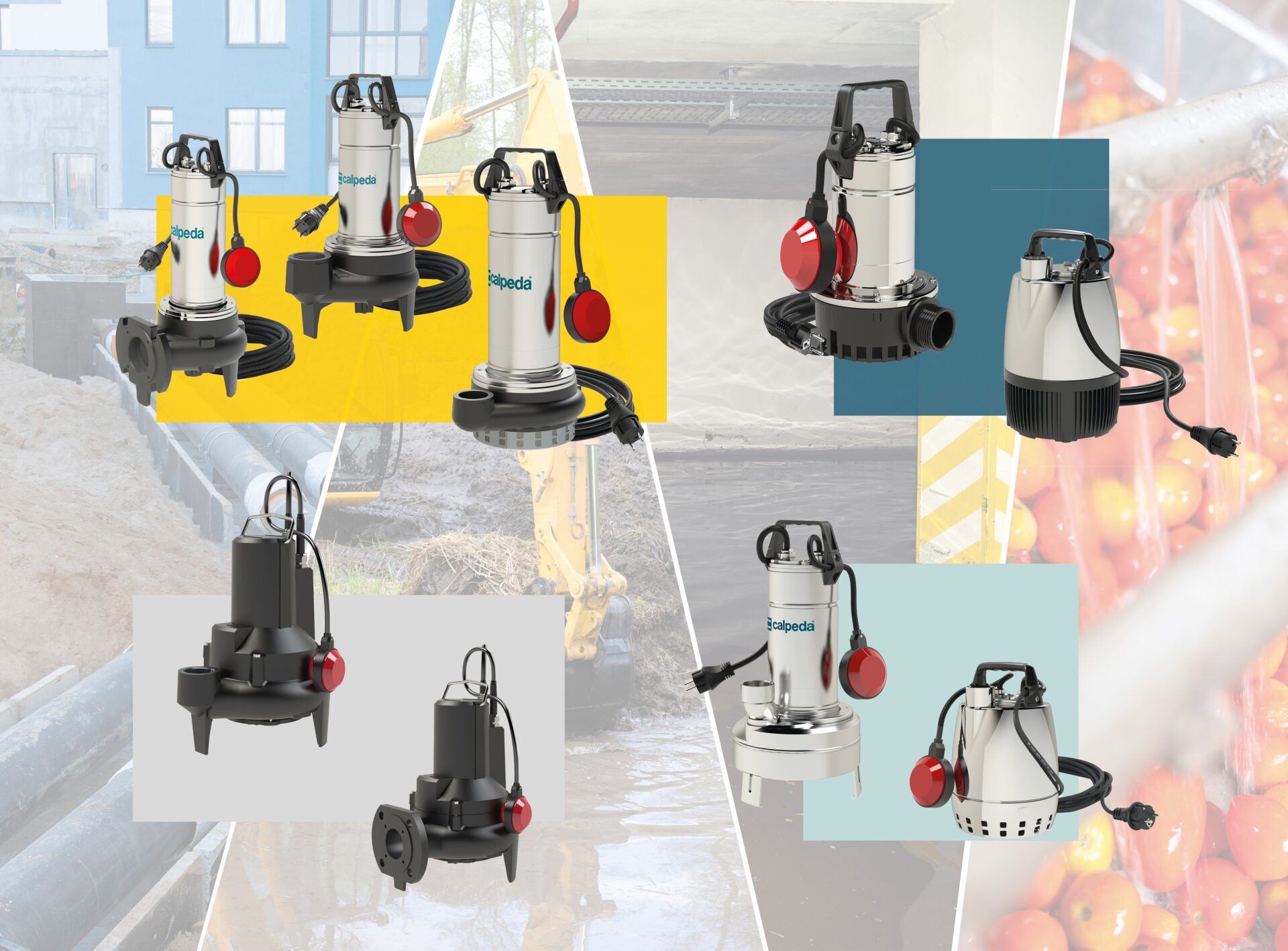
This article compares four Calpeda GQ submersible pump families: GQV/GQS with a vortex-type impeller, GQN with a two-channel impeller, GQG with a grinder system and GQR with an open impeller. Each solution is intended for different drainage and wastewater pumping needs, depending on the nature of the liquid, solids passage and duty point.
Selection starts with the liquid, solids and duty point
In a drainage installation, comparing power alone is not enough. The nature of the liquid, solids size, presence of fibres, required flow rate, head, discharge configuration and electrical supply conditions must all be considered.
This article compares four Calpeda GQ submersible pump families with different hydraulic solutions: GQV and GQS, with a vortex-type impeller for wastewater; GQN, with a two-channel impeller; GQG, with a grinder system for fibrous materials; and GQR, with an open impeller for draining clean water containing suspended solids up to 6 or 10 mm depending on the model.
Calpeda publishes specific documentation for 50 and 60 Hz power supplies. The official 50 Hz datasheet includes GQV 50 and GQV 65 models up to 2.6 kW, as well as GQR configurations up to 2.0 kW and a head of 30.2 m at zero flow for the GQR 6-32-30.
Four hydraulic designs for handling solids and fibres across different pumping heads
The four families use different hydraulic solutions and publish specific solids passages, application fields and Q/H curves. Selection should be based on the characteristics of the liquid, the type of solids and the required duty point.
From water type to the right pump
A practical reading of the range highlights four main scenarios.
Vortex impeller
The family uses a vortex-type impeller and publishes free passages of 40, 50 or 65 mm depending on the series for pumping dirty water and wastewater.
Two channels
The two-channel impeller is designed for pumping civil and industrial wastewater containing solids up to 50 mm, depending on the model and duty point.
Grinder system
The grinder system incorporates one fixed blade and one rotating blade and is intended for liquids containing long or fibrous materials, paper and textiles.
Open impeller
Drainage solution for clean water containing suspended solids up to 6 or 10 mm depending on the model. The 50 Hz datasheet includes GQR 6-32 configurations with head values up to 30.2 m at zero flow.
GQV/GQS, GQN, GQG and GQR: what each family offers
All four series are submersible and differ in hydraulics, discharge configuration, solids passage and application field.
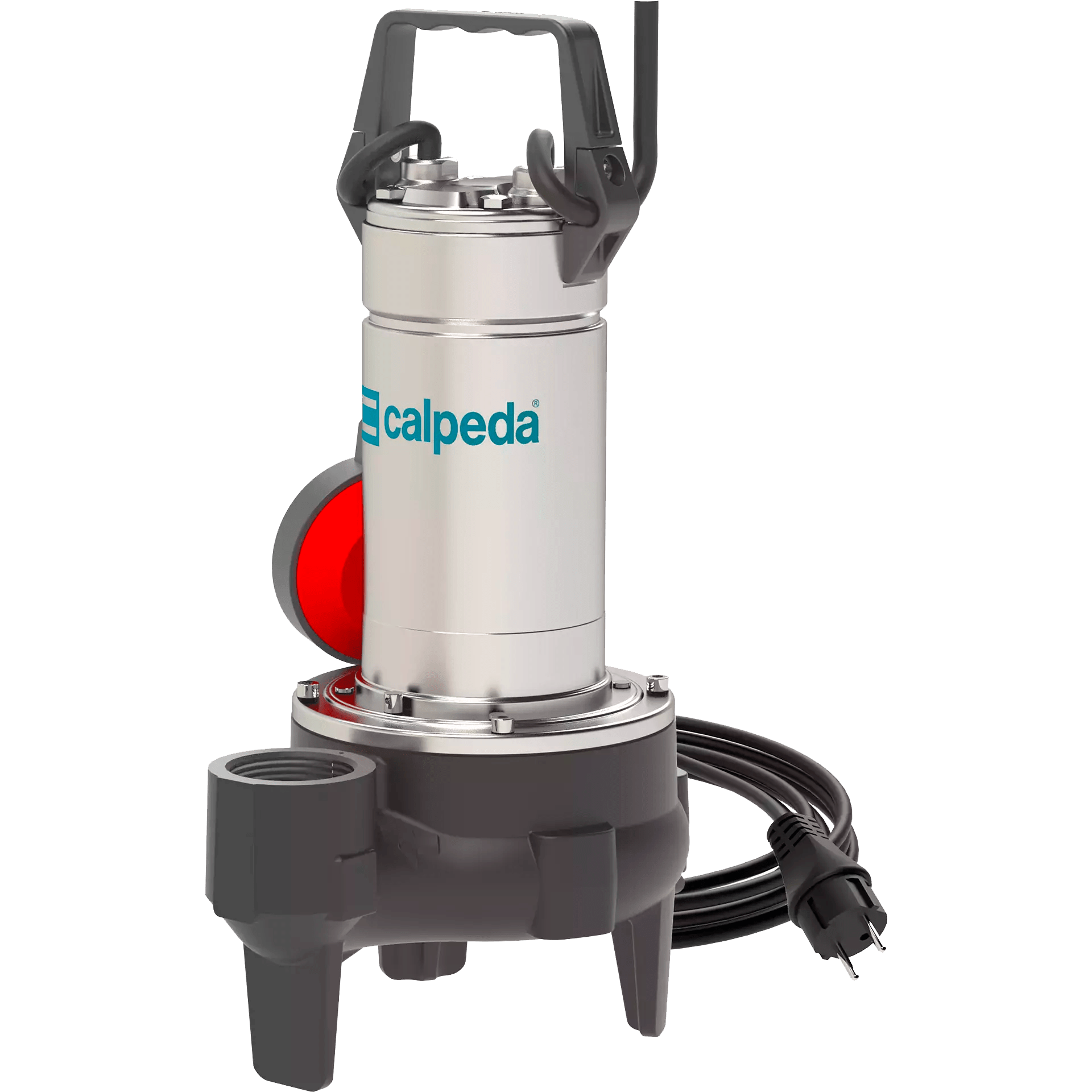
GQV / GQS
Single-impeller submersible pumps with vortex-type hydraulics, intended for pumping dirty water and wastewater. The GQS has a vertical threaded discharge, while the GQV has a horizontal discharge, threaded or flanged depending on the model.
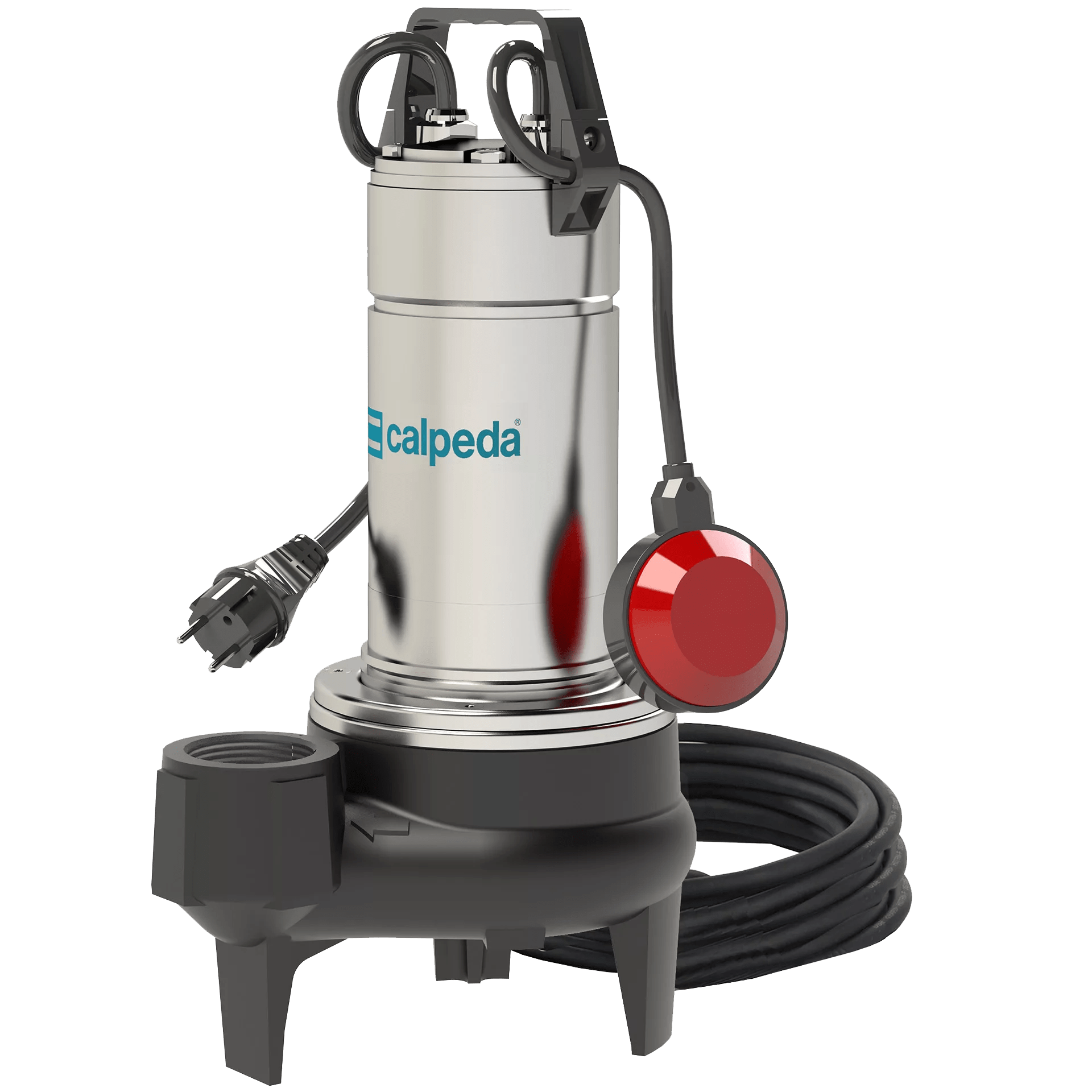
GQN
The two-channel impeller is designed for pumping civil and industrial wastewater containing solids up to 50 mm. The discharge is vertical and threaded G 2.
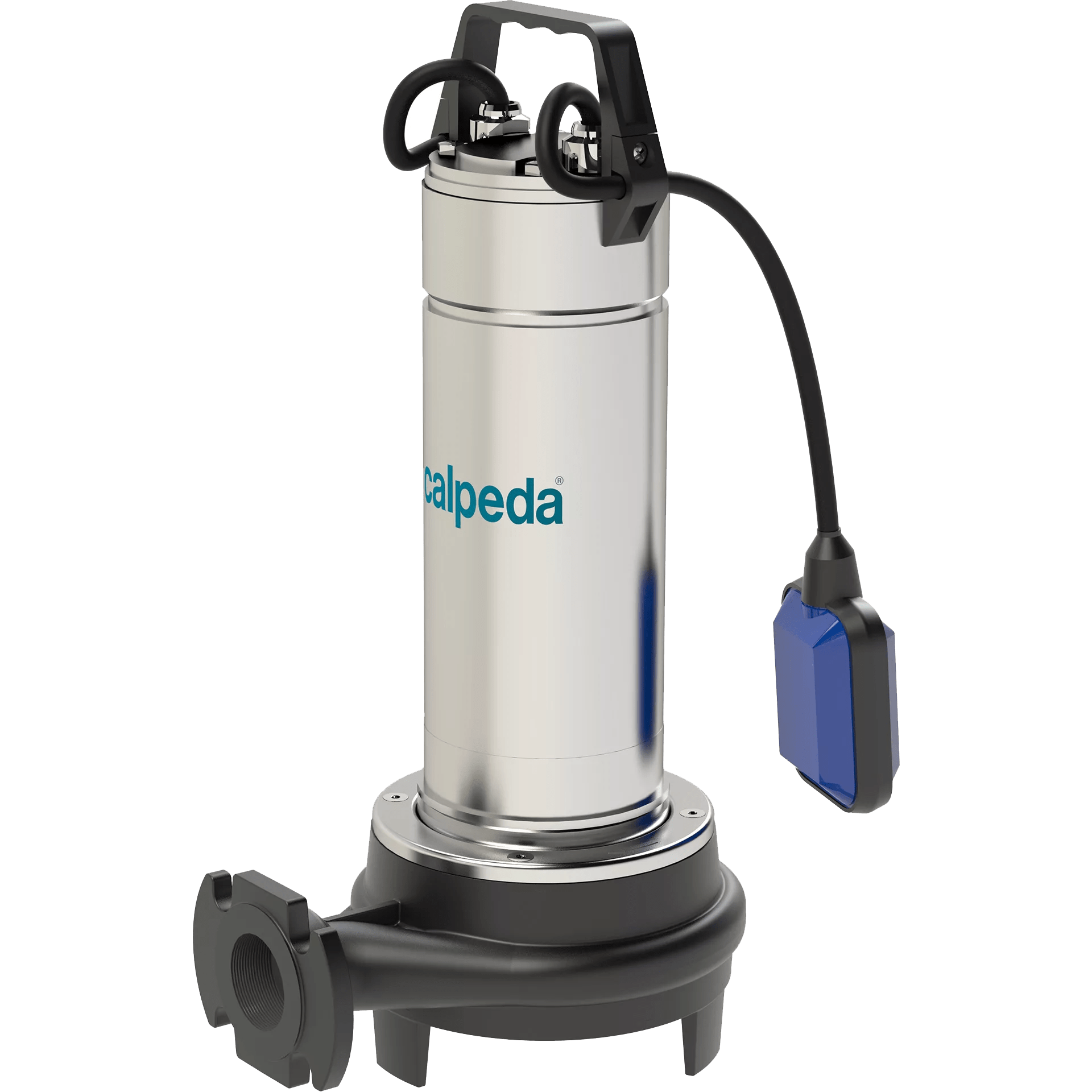
GQG
Series with a grinder system for liquids containing long or fibrous materials, paper and textiles. It has a horizontal threaded G 1 1/2 or flanged DN 32 PN 6 discharge.
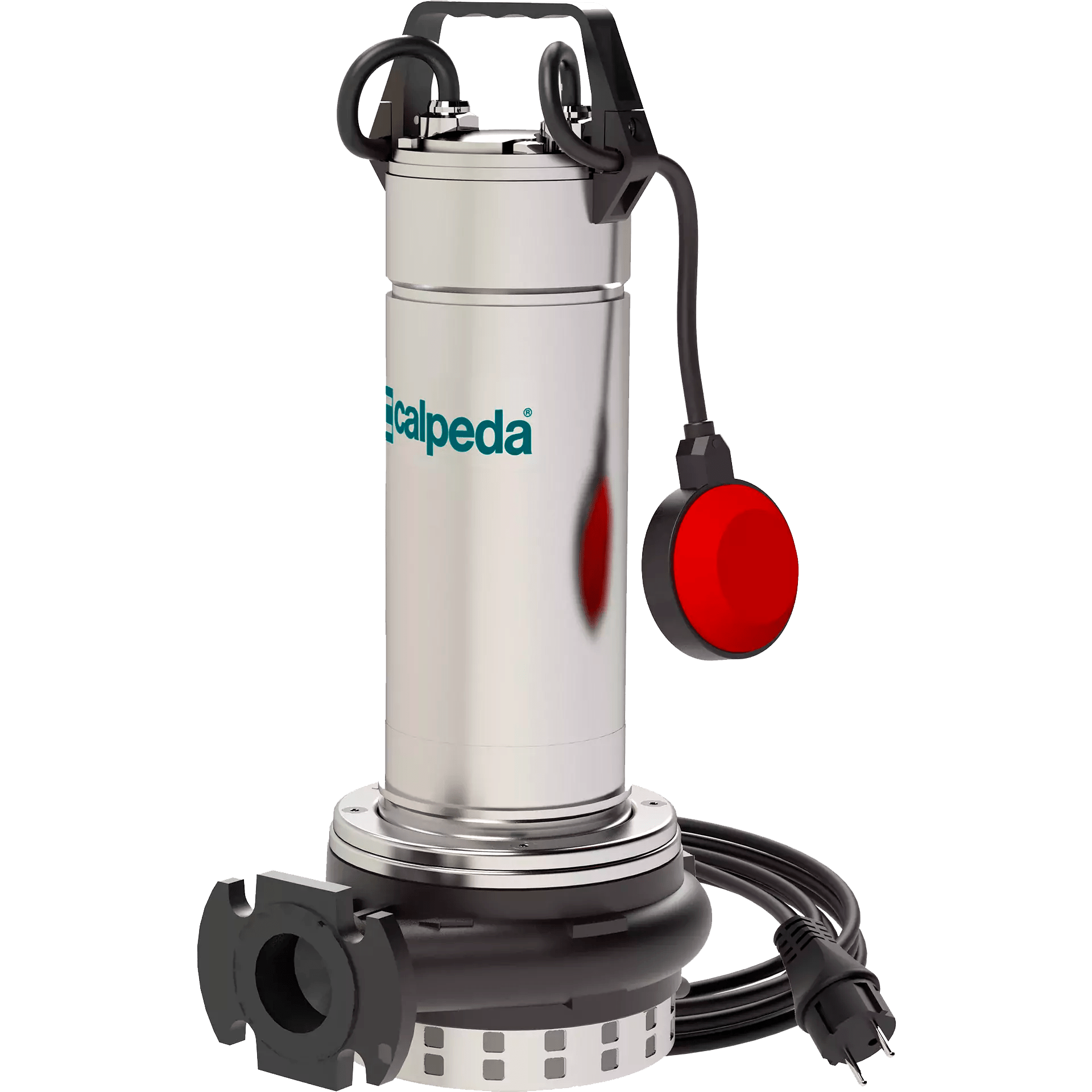
GQR
Drainage family for clean water containing suspended solids up to 6 or 10 mm depending on the model. It includes configurations with vertical or horizontal, threaded or flanged discharges.
Models and performance at the upper end of the range
GQV 50 and GQV 65 models at the upper end of the range
The official datasheet includes models up to 2.6 kW and Q/H table points up to 18 m at zero flow.
The highlighted models retain the vortex-type impeller and include 50 or 65 mm free passages with motors up to 2.6 kW.
| Featured model | Free passage | Power |
|---|---|---|
| GQV 50-16 | 50 mm | 2,0 kW |
| GQV 50-18 | 50 mm | 2,6 kW |
| GQV 65-13 | 65 mm | 2,0 kW |
| GQV 65-15 | 65 mm | 2,6 kW |
The table shows representative models from the upper end of the range. To select the exact model, consult all Q/H curves in the official datasheet.
Six GQR configurations included in the updated datasheet
The updated 50 Hz datasheet includes three GQR 6-32 configurations and three GQR 10-50 configurations, with motors up to 2.0 kW and head values up to 30.2 m at zero flow.
The GQR 6-32 models have a 6 mm passage and horizontal DN 32 PN 6 / G 1 1/2 discharge, while the GQR 10-50 models have a 10 mm passage and horizontal DN 50 PN 10 / G 2 discharge.
| Model | Discharge | Power |
|---|---|---|
| GQR 6-32-24 | Horizontal DN 32 PN 6 / G 1 1/2 | 1,1 kW |
| GQR 6-32-27 | Horizontal DN 32 PN 6 / G 1 1/2 | 1,5 kW |
| GQR 6-32-30 | Horizontal DN 32 PN 6 / G 1 1/2 | 1,8 kW |
| GQR 10-50-14 | Horizontal DN 50 PN 10 / G 2 | 1,1 kW |
| GQR 10-50-16 | Horizontal DN 50 PN 10 / G 2 | 1,5 kW |
| GQR 10-50-18 | Horizontal DN 50 PN 10 / G 2 | 2,0 kW |
Flow and head data must be read from the table and Q/H curve for each model; final selection should be made using the required flow rate and the actual installation conditions.
Robust construction to protect the motor and support reliability
The datasheets document a cast-iron pump casing, an AISI 304 stainless-steel motor jacket and a sealing system with an oil chamber. The instruction manual also confirms an air vent valve for the GQR, GQN, GQS, GQV and GQG series. Most models use two mechanical seals; according to the official datasheet, the GQS 40 does not include the upper mechanical seal.
Construction elements focused on motor protection
The datasheets specify the main materials, sealing system, motor protection and operating conditions for each series.
Drainage, wastewater and irrigation applications
Calpeda datasheets cover emptying flooded areas and tanks, pumping civil and industrial wastewater, liquids containing fibrous materials, and various drainage and irrigation applications depending on the series.
Flooded areas and tanks
Emptying flooded areas and tanks with the appropriate series according to the nature of the liquid and the solids present.
Fibrous materials, paper and textiles
The GQG series is intended for liquids containing long or fibrous materials, paper and textiles and incorporates a grinder system.
Civil and industrial wastewater
The GQV/GQS and GQN families are intended for pumping dirty water or wastewater containing solids, depending on the series.
Ponds, streams, rainwater and irrigation
GQR documentation covers extracting water from ponds, streams and rainwater collection pits, as well as irrigation applications.
Before selecting the pump, check the nature and temperature of the liquid, the solids or fibres present, required flow rate and head, connection, electrical supply and installation conditions specified by Calpeda.
Technical comparison of the four families
The table summarises the most useful selection data. Values come mainly from the latest 50 Hz datasheets and do not necessarily represent a single model.
| Criterion | GQV / GQS | GQN | GQG | GQR |
|---|---|---|---|---|
| Impeller type | Vortex | Two channels | Grinder system + impeller | Open |
| Main application or liquid | Wastewater with solids | Civil and industrial wastewater | Liquids with fibres, paper or textiles | Clean water with suspended solids |
| Solids passage | 40 / 50 / 65 mm | 50 mm | 6 mm — published passage | 6 / 10 mm |
| Flow published in the Q/H table | Points up to 57 m³/h | Up to 48 m³/h | Up to 16.8 m³/h | Points up to 52 m³/h |
| Specified head | Up to 18 m at Q=0 | Up to approximately 16.4 m at Q=0 | Up to 25 m | 30,2 m a Q=0 |
| Maximum rated power P2 | 2,6 kW | 1,5 kW | 1,5 kW | 2,0 kW |
| Discharge configuration | Vertical GQS / horizontal GQV | Vertical | Horizontal | Vertical or horizontal depending on the model |
| Connections | Threaded and flanged | G 2 threaded | G 1 1/2 or DN 32 | G 1 1/2 · DN 32 PN 6 · G 2 · DN 50 PN 10 |
| Pump casing | Cast iron | Cast iron | Cast iron | Cast iron |
| Motor jacket | AISI 304 | AISI 304 | AISI 304 | AISI 304 |
| Sealing system | Double seal + oil, except GQS 40 | Double seal + oil | Double seal + oil | Double seal + oil |
| Protection and insulation class | IPX8 · Class F | IPX8 · Class F | IPX8 · Class F | IPX8 · Class F |
Correct interpretation: maximum values or endpoints in the flow, head and power tables may correspond to different models within the same family. They must not be combined as though they represented a single operating point.
Q=0: values indicated at zero flow correspond to the endpoint of the Q/H table; selection must be made using the required duty point.
50/60 Hz: the table values mainly summarise the 50 Hz documentation; for a 60 Hz power supply, the specific datasheet must be consulted.
Differences between official sources: general product pages may show earlier or narrower ranges.
Official datasheets, 50/60 Hz curves and instructions
To size a pump, use the official curve, verify the motor, check dimensions and follow the installation and maintenance instructions.
From initial comparison to the exact model
Product pages provide an overview. PDF datasheets include Q/H curves, dimensions, electrical data, materials and variants. Final selection must be validated against the model curve and the actual installation conditions.
View the official Calpeda rangeGQV / GQS
Range datasheet covering GQS 40, GQS/GQV 50 and GQV 65 models, curves, dimensions and materials.
GQN
Hydraulic ranges, solids passage, dimensions, motor and materials for the series.
GQG
Cutting system data, curves, DN 32 / G 1 1/2 connections and motor configurations.
GQR
Complete open-impeller range, including GQR 6-32 and GQR 10-50 configurations in the updated datasheet.
Frequently asked questions
What is the difference between GQV and GQS?
They share vortex-type hydraulics. The main difference is the discharge configuration: the GQS has a vertical threaded discharge, while the GQV has a horizontal discharge, threaded or flanged depending on the model.
Which family handles the largest solids?
The GQV 65 publishes the largest free passage, up to 65 mm. The GQN reaches 50 mm, while GQR models have a free passage of 6 or 10 mm depending on the model.
When can a GQN be suitable instead of a GQV?
The GQN uses a two-channel impeller and is intended for pumping civil and industrial wastewater containing solids up to 50 mm. Comparison with a GQV should take into account the liquid, solids passage, flow rate, head and the model’s discharge configuration.
Can the GQG pump fibres and textiles?
Yes. Calpeda specifies it for liquids containing long or fibrous materials, paper and textiles. The datasheet specifies a grinder system with one fixed blade and one rotating blade.
Which GQR model has the highest head?
The updated 50 Hz datasheet includes the GQR 6-32-30, with a head of approximately 30.2 m at zero flow and a 1.8 kW motor.
Do all GQ pumps have a float switch?
No. Depending on the model and version, single-phase versions may include a float switch, thermal protector and capacitor. Always check the exact pump code.
Why is the air vent valve important?
The valve allows air accumulated around the impeller to be released and helps pumping resume after a period of inactivity.
Can a pump be selected by power alone?
No. Selection requires checking the flow rate and head on the model’s Q/H curve and verifying the liquid, solids passage, temperature, connection and electrical data for the specific version.
Can 50 Hz data be used for 60 Hz?
Not directly. Calpeda publishes specific 60 Hz datasheets because the curves, speeds and electrical data differ. The documentation corresponding to the actual power supply must be used.
What is the maximum liquid temperature?
The datasheets for all four families specify 35 °C as the maximum liquid temperature under the published operating conditions.