


 2026 Guide
Updated August 2026
2026 Guide
Updated August 2026
Grundfos SB and SBA Pumps: A Solution for Rainwater Harvesting
Discover how Grundfos integrates SB and SBA submersible pumps into domestic rainwater harvesting systems: non-potable uses, control selection, inlet filtration, protection features and submerged operation.
1Why harvest rainwater?
Grundfos presents rainwater harvesting as a sustainable way to collect, store and use water around the home. Reducing reliance on mains water helps conserve drinking water and provides an alternative source for non-potable uses during periods of high demand or scarcity.
More sustainable water management
- Drinking water conservation: rainwater can replace mains water for non-potable uses.
- Less reliance on mains water: an alternative water source is stored in the tank.
- Resource efficiency: Grundfos associates rainwater reuse with more sustainable management of local water resources.
Benefits for the home
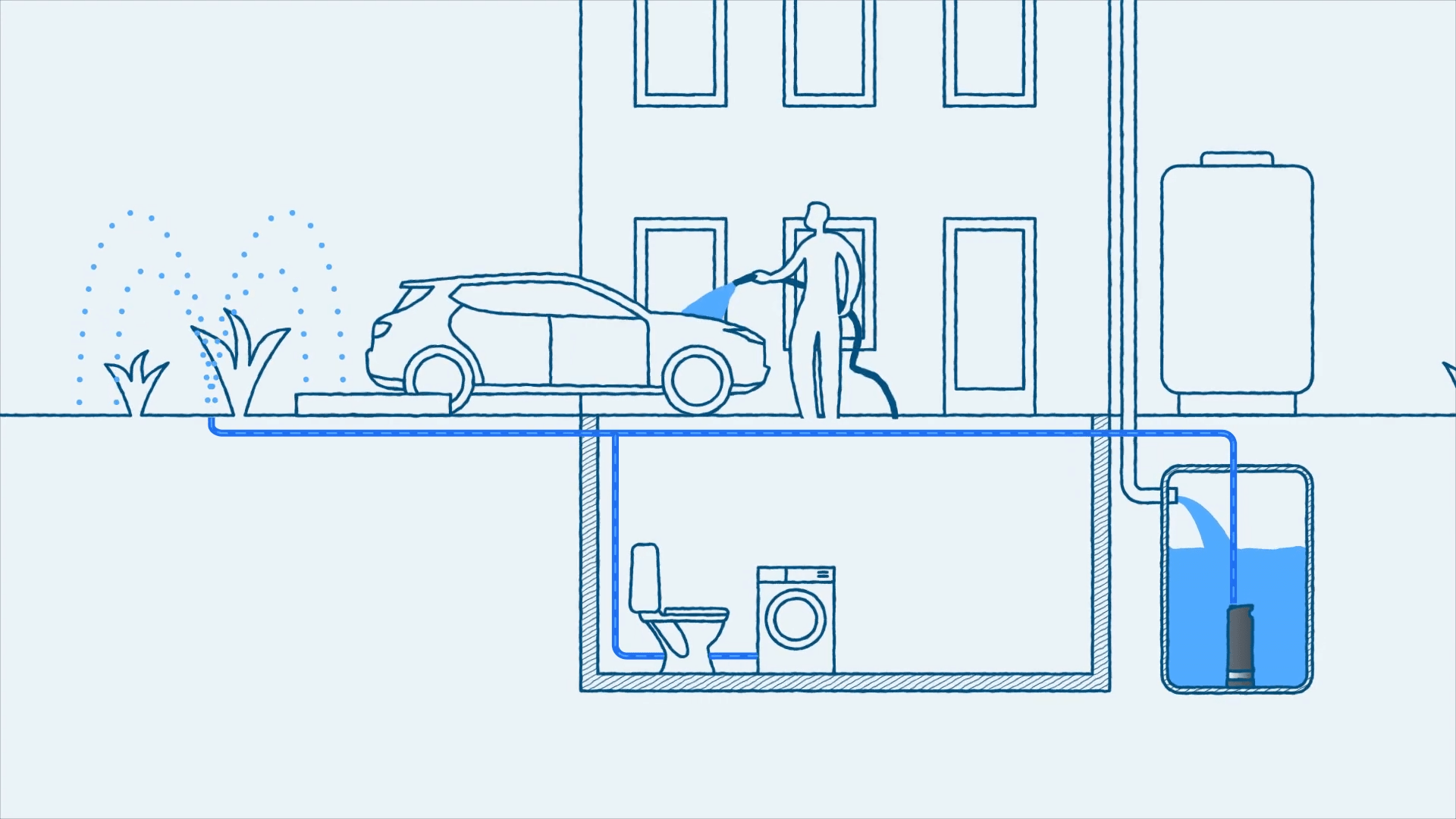
- Less mains water: irrigation, toilet cisterns, vehicle washing and washing machines can use harvested water.
- Water costs: Grundfos notes that reducing reliance on tap water can help manage water costs.
- Less limescale: rainwater is naturally soft and can reduce limescale build-up in household appliances.
Domestic uses
Grundfos cites irrigation, vehicle washing, toilet flushing and washing machines as common uses for harvested rainwater.
Naturally soft water
Grundfos training material highlights that rainwater is naturally soft and that this can help reduce limescale formation.
Real-world sizing
The amount available depends on rainfall, catchment area, storage and demand. The pump must be selected according to the required flow rate, head and performance curve.
2How does a rainwater harvesting system work?
In the applications described by Grundfos, rainwater is collected and stored in a tank. An SB or SBA submersible pump then supplies the water to the points of use. Inlet filtration and level control help protect the pump and the installation.
1. Collection
Rainwater is collected from the catchment surface and conveyed to the storage system.
2. Conveyance
The pipework carries the harvested water to the tank or cistern.
3. Filtration
Grundfos provides a fixed inlet strainer or floating suction to limit large particles entering the pump.
4. Storage
The SB or SBA is installed directly inside the tank or well, below the permissible water level for the model.
5. Pressurisation
The pump supplies water to the points of use. The SBA integrates pressure and flow control; the SB uses an external control unit.
6. Optional backup
If an alternative source is required when the tank runs empty, Grundfos states that SB/SBA require a separate refill system.
3Grundfos SB and SBA Pumps: Features and Benefits
Submersible booster pumps for domestic water supply, tanks, wells, irrigation and rainwater harvesting. The range uses corrosion-resistant composite materials and stainless steel; Grundfos states an MEI of 0.70 and offers a fixed strainer or floating suction depending on configuration.
SBA Plug-and-Pump
The SBA incorporates an integrated automatic controller for pressure and flow control; the SB operates with external control.
Submerged operation
Grundfos highlights that, because the pumps are submerged, they operate quietly and are acoustically more discreet than a dry-installed solution.
Protection features
The range includes thermal motor protection. The SBA adds integrated dry-running protection with automatic restart; on the SB it can be supplemented with a float switch and external control.
Floating suction
Available depending on the variant. It draws water just below the surface, where there is usually less debris from the bottom.
Equipment by product reference
The verified product references include a 15 m power cable. The non-return valve is not universal: Grundfos Product Center Spain states NO for the verified SB A references and YES for the verified SBA A references; always check the specific product number.
Efficiency
Grundfos places SB and SBA among the most efficient pumps in their class and states an MEI of 0.70.
4Comparison: Grundfos SB vs SBA
SB and SBA share the submersible booster pump concept and many features of the range. The essential difference highlighted by Grundfos is the control system: the SBA integrates automatic control; the SB allows an external control unit to be selected.
• You want a solution with an integrated automatic controller
• You prioritise plug-and-pump simplicity
• You want to reduce external control components
• The integrated configuration suits the required duty point
• You want to select PM START or PM PLUS separately
• You need to integrate the pump into an existing control architecture
• You want a more modular configuration
• The external control unit is part of the planned design
5Technical Specifications
| Parameter | Value / Detail |
|---|---|
| Pump type | Submersible booster, multistage |
| Applications described by Grundfos | Domestic water supply, tanks, wells, rainwater harvesting and garden irrigation |
| Qmax — SB 3-35 A (92712333) | Qmax 6.1 m³/h according to the official Grundfos 2026 catalogue; Hmax 34 m according to Grundfos Product Center Spain |
| Qmax — SB 3-45 A (92712340) | Qmax 6.3 m³/h according to the official Grundfos 2026 catalogue; Hmax 45 m according to Grundfos Product Center Spain |
| Qmax — SBA 3-35 A (92713060) | Qmax 6.0 m³/h according to the official Grundfos 2026 catalogue; Hmax 34 m according to Grundfos Product Center Spain |
| Qmax — SBA 3-45 A (92713068) | Qmax 6.2 m³/h according to the official Grundfos 2026 catalogue; Hmax 45 m according to Grundfos Product Center Spain |
| Power supply | 1 × 230 V in the European references in the 2026 catalogue |
| Materials | Corrosion-resistant composite materials and stainless steel |
| Inlet / filtration | Fixed inlet strainer or floating suction depending on variant; Grundfos describes a 1 mm mesh for the fixed strainer |
| MEI index | 0.70 according to Grundfos Ecademy |
| Power cable | 15 m according to the official range description |
| Control | SB: external control. SBA: integrated automatic pressure and flow controller |
| Protection features | Thermal motor protection across the range; the SBA adds integrated dry-running protection with automatic restart. On the SB, the float switch and external PM START/PM PLUS controls can provide protection against lack of water. |
| Variants | M = without float switch; A = with float switch; W = floating suction suffix (MW/AW), according to the official Grundfos 2026 catalogue |
Common Applications
Garden Irrigation
Irrigation with rainwater or water from shallow wells
Toilet Cisterns
Toilet flushing with harvested rainwater
Washing Machine
Grundfos includes laundry among the domestic uses of rainwater
Vehicle Washing
One of the non-potable uses cited by Grundfos Ecademy
Domestic Tanks
Pressurisation from roof tanks or break tanks
Shallow Wells
Water supply and irrigation from shallow wells
6Step-by-Step Installation Guide
This sequence summarises the criteria Grundfos highlights for selecting and integrating SB/SBA. It does not replace the installation and operating instructions for the specific product number.
Define the application and duty point
Determine whether the pump will operate with rainwater, a tank, a well or irrigation, and calculate the flow rate and head required by the installation. Check the duty point against the official model curve.
Choose between SB and SBA
SB: Grundfos recommends external controllers such as PM START or PM PLUS.
SBA: uses the integrated automatic pressure and flow controller for a plug-and-pump solution.
Select level protection
Consider whether you need a variant with a float switch. Grundfos states that the float stops the motor when the level becomes too low and provides additional protection against dry running.
Choose the inlet type
You can choose a fixed strainer or floating suction depending on the variant. The floating suction draws water just below the surface; the fixed strainer filters the inlet through a 1 mm mesh according to the Grundfos description.
Install the pump inside the tank or well
Observe the voltage, connection configuration and all other conditions stated in the official documentation for the product number. The 2026 European catalogue for the verified references states a 1 × 230 V power supply.
Provide a separate backup if required
The SB/SBA is not, by itself, an automatic mains-water changeover system. Grundfos specifies that, if an alternative source is required when rainwater is exhausted, a separate refill or backup system is needed.
7System Maintenance and Care
To keep the technical claims traceable exclusively to official Grundfos sources, this guide does not set generic schedules such as “every 3–6 months” or “every 1–2 years”. Grundfos centralises in Product Center the installation and operating instructions, documentation, specifications and service material for each product number.
Checks according to the official manual
Checks, maintenance and service procedures must be carried out according to the installation and operating instructions and service documentation for the specific product number available in Grundfos Product Center.
Documentation for the specific model
- Product Center: check the specifications for the installed product number.
- Official manual: follow the corresponding installation and operating instructions.
- Troubleshooting: Grundfos includes diagnostic information in the product documentation.
- Service: use official Grundfos documentation and resources for maintenance and spare parts.
8Frequently Asked Questions (FAQ)
Grundfos presents rainwater harvesting for non-potable uses such as garden irrigation, vehicle washing, toilet flushing and washing machines. This guide does not present harvested rainwater as drinking water.
The SBA incorporates an integrated automatic controller for pressure and flow control and offers plug-and-pump simplicity. The SB uses an external control unit, allowing the control system to be configured separately.
The official Grundfos 2026 catalogue states Qmax between 6.0 and 6.3 m³/h depending on the model. For the Spanish market, Grundfos Product Center states Hmax between 34 and 45 m for the verified references. Grundfos Ecademy mentions flow rates of up to approximately 3 m³/h in its introductory module. For sizing, use the curve and data for the specific product number and market.
Yes. Grundfos describes them as submersible booster pumps installed directly in a tank or well. This configuration is precisely what allows them to be used in rainwater harvesting systems.
Grundfos offers two options depending on the variant: a fixed inlet strainer with a 1 mm mesh or a floating suction that draws water just below the surface, where there is usually less debris from the bottom.
According to Grundfos, the float provides additional protection by stopping the motor when the water level becomes too low. This helps prevent dry running and can reduce the risk of debris blocking the inlet.
The official Grundfos 2026 catalogue states thermal motor protection across the range. The SBA adds integrated dry-running protection with automatic restart. On the SB, the float switch and external controllers such as PM START or PM PLUS can provide protection against lack of water.
Not on their own. Grundfos states that SB/SBA solutions require a separate refill system if an alternative source is needed when the rainwater tank runs empty.
Grundfos notes that, because they operate submerged, SB and SBA run quietly and are a quieter alternative to dry-installed pumps.
Grundfos states a minimum efficiency index (MEI) of 0.70 for the SB and SBA range and places it among the most efficient pumps in its class.
Yes. Grundfos includes laundry among domestic uses for rainwater and highlights that rainwater is naturally soft, which can help reduce limescale build-up in household appliances.
Maintenance must be carried out according to the installation and operating instructions for the specific product number. Grundfos Product Center provides access to manuals, specifications, documentation and service information for each model.
Grundfos SB and SBA pumps offer a submersible solution for pressurising water from tanks, wells and rainwater harvesting systems. Grundfos highlights their MEI 0.70 efficiency, quiet submerged operation, corrosion-resistant materials, and filtration and protection options.
The main difference is the control system: the SBA incorporates an integrated automatic controller, while the SB uses external control. To size the installation correctly, check the curve, duty point and product-number specifications in Grundfos Product Center.
Grundfos was founded in 1945; therefore, in 2026 it has more than 80 years of history in pumping and water-management solutions.
Technical traceability: All technical data and claims in this guide about Grundfos SB and SBA pumps have been checked against official Grundfos sources, including Grundfos Product Center Spain, Grundfos Ecademy and official manufacturer documentation.
Official Grundfos sources used: Introduction to the SB/SBA range · SB/SBA in rainwater harvesting · SB/SBA selection · External PM START / PM PLUS controls · Official Grundfos 2026 catalogue · Backup water management · Introduction to rainwater harvesting · Official product documentation · History of Grundfos · SB 3-35 A 92712333 · SB 3-45 A 92712340 · SBA 3-35 A 92713060 · SBA 3-45 A 92713068. Specifications may vary by variant, market or manufacturer revision. Last technical review: 13 August 2026.


