


 Technical Report 2026
Workplace Lighting of the Future: Efficiency, Well-being and Design with TRILUX
In-depth analysis of how TRILUX redefines corporate environments through comprehensive projects. Discover the success cases of Bühler AG, Atelier drü and Winterhalter Ibérica, and the Human Centric Lighting (HCL) technology that is changing the game.
In a post-pandemic and hybrid work landscape, light has ceased to be a simple functional element to become a strategic architectural tool. TRILUX, European leader in lighting solutions with over a century of history, demonstrates with its latest projects that it is possible to combine three fundamental pillars: maximum lighting quality (UGR<19), extreme energy efficiency for corporate sustainability (ESG) and a coherent design that reinforces brand identity. This technical guide breaks down how this philosophy is applied in real, high-demand environments.
1Key Concepts: The Science Behind Perfect Light
Before analyzing the projects, it is essential to understand the two technologies that TRILUX rigorously applies to exceed standard regulations and offer real value to end users.
Human Centric Lighting (HCL)
Also known as human-centric lighting. This technology emulates the natural course of sunlight, automatically adjusting intensity and color temperature (from warm to cool) throughout the day. It synchronizes workers' circadian rhythm, improving morning concentration, reducing afternoon visual fatigue and increasing overall well-being, as implemented at Winterhalter Ibérica.
UGR Index < 19
The Unified Glare Rating (UGR) measures the visual discomfort caused by light sources. While the minimum regulation for offices is UGR < 19, TRILUX applies this rigor as a base standard in all its workplace projects (such as with the Opendo series). A low UGR eliminates screen reflections and drastically reduces headaches and visual stress.
2Bühler AG: Operational Excellence at the Customer Centre
The Swiss technology group needed a space that reflected its innovation. TRILUX designed a solution that combines technical rigor for workstations with an immersive, light-guided visitor experience.
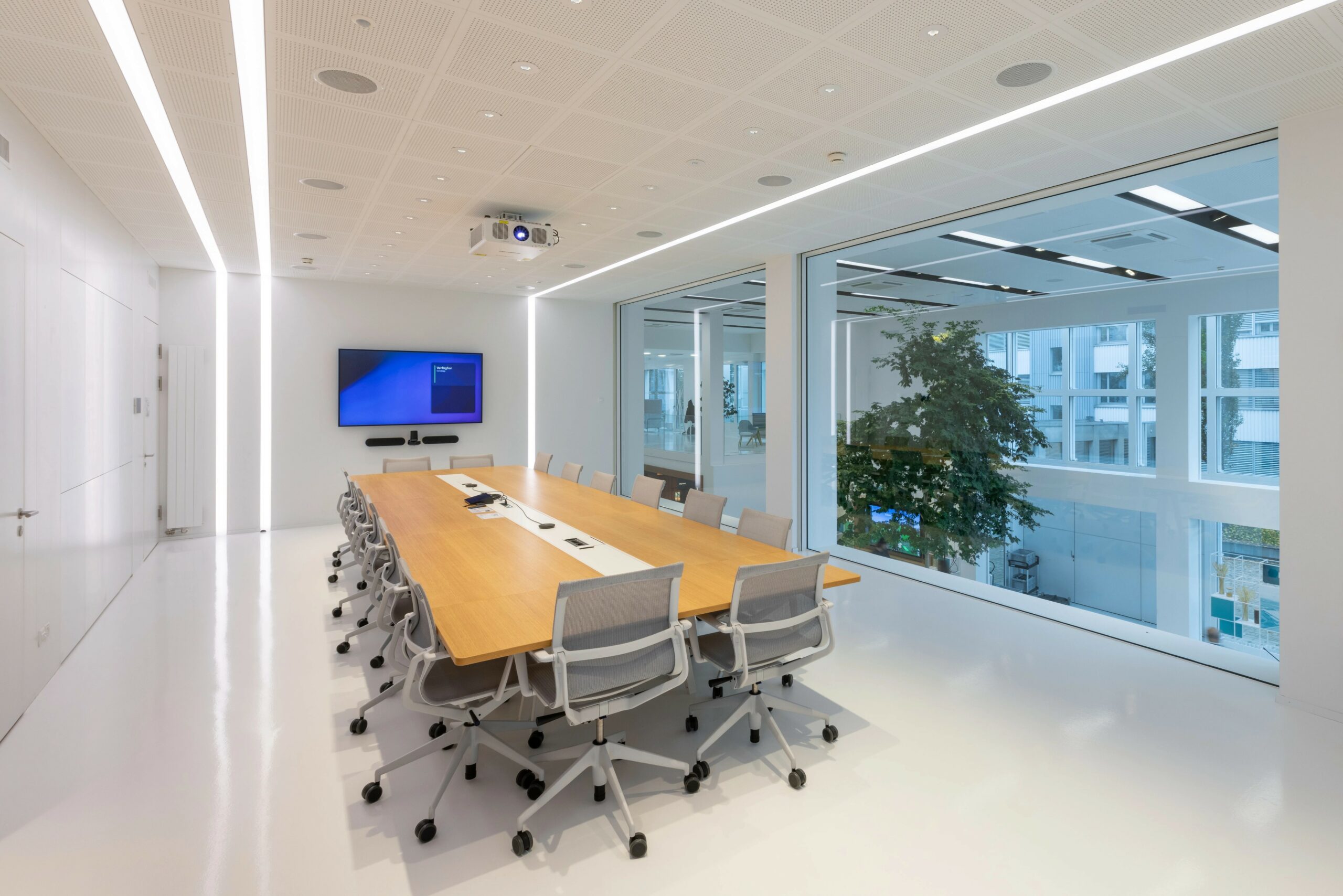
The intervention at Bühler AG is divided into two clearly differentiated scenarios, resolved with specific TRILUX products:
Work Areas (Opendo LED)
Installation of Opendo LED surface luminaires. Achieves excellent luminous performance while strictly maintaining UGR<19, ensuring visual comfort for employees during prolonged screen sessions.
Common Areas (Polaron IQ)
For the 2,100 m² of the center, flush ceiling Polaron IQ recessed spotlights were installed. Distributed irregularly, they create a "swarm of light points" that acts as passive signage, intuitively guiding visitors through the different routes.
Result
A space that not only complies with the strictest safety and efficiency regulations, but uses light as a wayfinding tool and reinforces Bühler's cutting-edge technology brand image.
3Atelier drü: Raw Architecture and Sculptural Light
An architectural challenge in a space with exposed concrete ceilings. The lighting solution had to respect the rawness of the material while providing perfect work lighting and acoustic improvements.
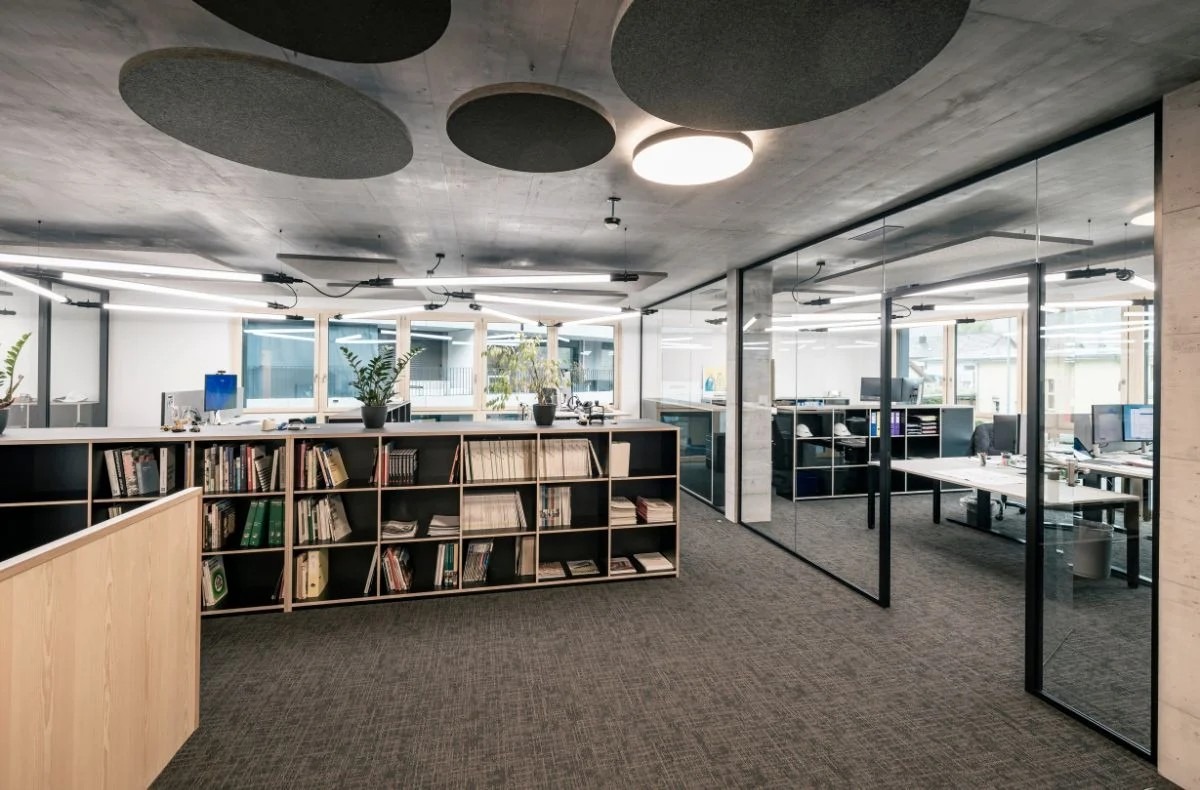
In creative environments like an architecture studio, light must be as flexible as it is inspiring. TRILUX addressed the exposed concrete challenge with two complementary strategies:
The So-Tube tubular luminaire was chosen, installed as a continuous strip of light but distributed irregularly. This groundbreaking design guarantees uniform, shadow-free illumination over drawing tables and screens, integrating as another sculptural element of the interior architecture.
For meeting and rest areas, where concrete reverberation could be a problem, TRILUX integrated round panels with Taiwo circular surface luminaires. This dual solution adds a futuristic touch through chromatic and formal similarity, while the integrated acoustic panels significantly improve the acoustic comfort of the space.
4Winterhalter Ibérica: Scalability, HCL and KNX Integration
A large-scale project with more than 100 workstations that required user personalization, overall energy efficiency and a coherent visual identity from the parking lot to the office.
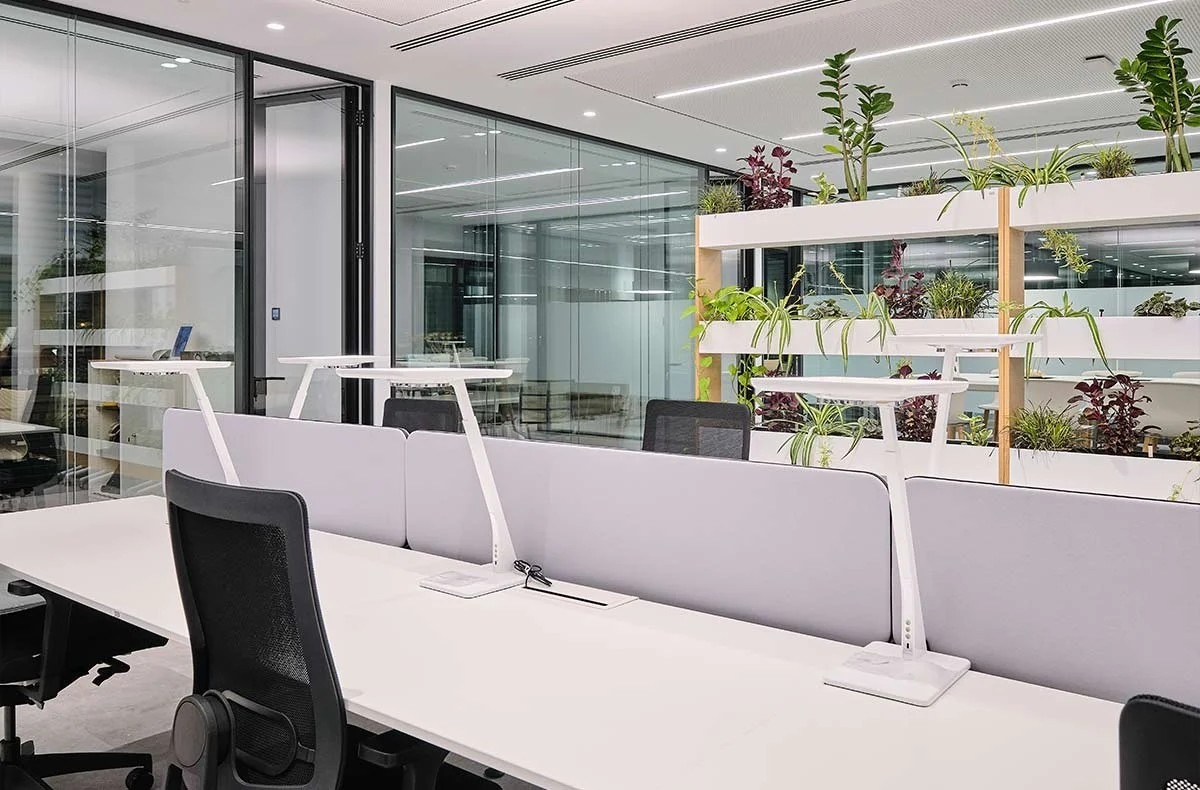
This project stands out for its complexity and comprehensiveness, covering all areas of the facilities with the optimal solution for each use case:
Workstations (Bicult)
The Bicult desk luminaire allows each user to adjust and save their preferred brightness and color temperature levels via a mobile app. It incorporates Human Centric Lighting (HCL) technology and is fully integrated into the building's KNX system for centralized energy control and monitoring.
Corridors and Circulations
A major challenge resolved by combining the Sonnos and FINEA linear series in runs of up to 22 meters. TRILUX managed to create "imaginary corridors" that, through light, invite relaxation and guide traffic fluidly and safely.
Outdoors and Security
Lighting designed for security and brand image: Lumena Plus for parking and warehouse (high efficiency and resistance). Combination of Altigo and Skeo at entrances and façades for a distinctive nighttime visual identity. Square Olisq luminaires on stairs, combining security and minimalism.
Smart Management (KNX)
Integration with KNX not only allows energy savings through presence sensors and daylight (Daylight Harvesting), but also the generation of data for sustainable building certifications (LEED / BREEAM), a key added value for Winterhalter.
5Technical Comparison of Featured Luminaires
For professionals and installers, this table summarizes the key specifications of the TRILUX solutions mentioned, facilitating selection according to project requirements.
| TRILUX Model | Main Application | UGR Index | Control and Connectivity | Differential Feature |
|---|---|---|---|---|
| Opendo LED | Offices, Meeting Rooms | < 19 | DALI, Optional Sensors | Excellent performance with minimalist surface design. |
| Bicult | Individual Workstations | < 19 | Mobile App, KNX Integration, HCL | Individual color temperature and intensity regulation by the user. |
| So-Tube | Studios, Creative Spaces, Corridors | Variable | DALI | Flexible tubular format for organic linear installations. |
| Taiwo | Common Areas, Waiting Rooms | N/A | ON/OFF, DALI | Native integration with acoustic panels to improve sonic comfort. |
| Lumena Plus | Parking Lots, Warehouses, Storage | N/A | DALI, Motion Sensors | High resistance (IK/IP), extreme energy efficiency. |
6Return on Investment (ROI) and Sustainability (ESG)
Beyond aesthetics and well-being, professional lighting is a major operating expense. Modernizing with TRILUX is not a cost, but an investment with measurable returns:
📈 Economic and Environmental Impact of a Comprehensive Renovation
(vs. old fluorescent systems)
thanks to electricity bill savings
and reduction in absenteeism due to well-being (HCL)
In addition, TRILUX solutions directly contribute to obtaining sustainable building certifications such as LEED or BREEAM, thanks to their low carbon footprint, absence of harmful substances and ability to be recycled at the end of their useful life, aligning with the ESG objectives of any large corporation.
7TRILUX: Over a Century Illuminating the World
Founded in 1912 in Menden (Germany), TRILUX has evolved from a local workshop to an international benchmark group. With six production centers (Germany, Spain and Poland) and a team of more than 5,000 professionals, the company serves clients through 30 subsidiaries and a global network of partners.
What really sets TRILUX apart is not just its catalog of thousands of references, but its full-service approach. They don't just sell luminaires; they offer consultancy, lighting design, control system programming and training through the TRILUX Akademie, with training centers in Spain, Germany, France, the United Kingdom, the Arab Emirates and more countries. This knowledge transfer ensures that every project is executed with maximum technical rigor.
8Frequently Asked Questions (FAQ) about Corporate Lighting
Human Centric Lighting (HCL) is a technology that mimics the natural course of sunlight. It automatically adjusts intensity and color temperature to synchronize workers' circadian rhythm, improving concentration, reducing visual fatigue and increasing overall well-being.
UGR (Unified Glare Rating) is the unified glare index. A UGR<19 value is the gold standard recommended for office spaces, as it ensures that the light does not cause annoying glare, reducing visual fatigue and headaches. TRILUX applies this rigor as a base in its office solutions.
Luminaires such as the Bicult series incorporate DALI drivers or native KNX interfaces. This allows their full integration into smart building management systems, facilitating individual regulation, real-time consumption monitoring and sensor-based automation.
Replacing old systems with high-efficiency TRILUX solutions, combined with presence sensors and daylight regulation (Daylight Harvesting), can reduce lighting energy consumption by 50% to 70%, with a typical return on investment (ROI) of 2 to 4 years.
Yes. TRILUX has its own subsidiary in Spain and an extensive network of authorized distributors and installers (such as Industrial Gines) that offer lighting consultancy, "turnkey" project, certified installation and preventive maintenance services.
Lighting has ceased to be a secondary budget item to become a strategic asset. As demonstrated by the Bühler AG, Atelier drü and Winterhalter Ibérica projects, TRILUX offers a complete ecosystem that simultaneously solves people's well-being, energy savings and architectural aesthetics.
Whether for a comprehensive office renovation, industrial warehouse lighting or the creation of a hybrid workspace, having TRILUX technology and advice guarantees an excellent, sustainable and future-proof result.
Sources and references: Information based on official press releases and technical data sheets from TRILUX Group (2026). www.trilux.com · LinkedIn · Instagram.


